The Short Answer
A used tire that passes four checks — adequate tread, recent DOT date, clean sidewalls, and no hidden repairs — is a fundamentally sound product. It's the same tire it was when new, just partway through its life. The used tire market exists because millions of tires come off leased vehicles, early upgrades, and totaled-but-low-mileage cars with most of their tread intact.
The risk isn't "used" — it's unknown history plus skipped inspection. A used tire fails you when nobody checked its age, its repairs, or how it was worn. All three are checkable before you pay.
When Used Tires Are Fine
- Tread depth is 4/32" or more — ideally 6/32"+ (use the quarter test or a $5 gauge)
- DOT date code shows the tire is less than 6 years old
- No sidewall cracks, bulges, or visible repairs
- Purchased from a reputable shop that inspects tires before selling
- Wear is even across the full width of the tread
When to Walk Away
- DOT date code shows the tire is 6+ years old (rubber degrades internally even in storage)
- Tread depth under 4/32" (wet stopping distances increase dramatically)
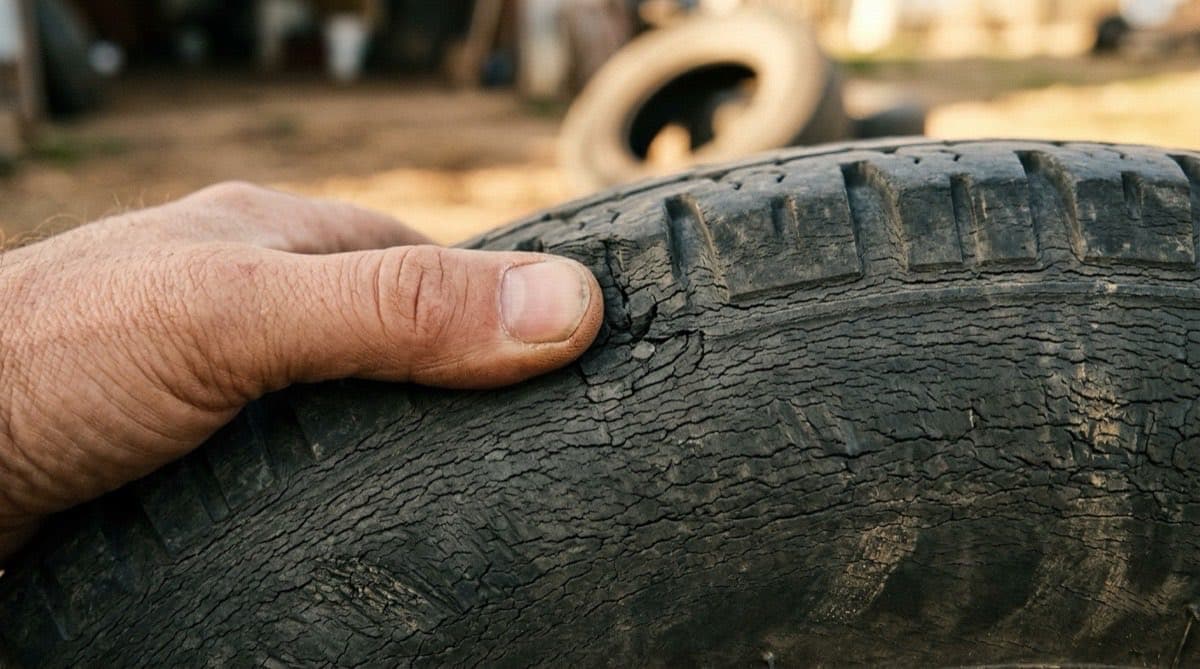
- Sidewall cracks, bubbles, or blistering — the sidewall takes constant flexing and has no tread to spare
- Any patch or plug repair near the shoulder or sidewall — repairs are only acceptable in the central tread area
- One-sided or cupped wear — the tire ran on a misaligned or worn-out suspension and will keep wearing badly
- Seller won't let you inspect the full tire before mounting
How to Read the DOT Date Code
Every tire has a DOT number molded into the sidewall. The last 4 digits tell you the week and year of manufacture: DOT ...2419 = week 24 of 2019 = June 2019.
Rubber compounds oxidize from the day they're cured — heat, sunlight, and ozone slowly harden the tire and open microscopic cracks, regardless of how much tread is left. That's why a garage-kept tire from 2018 with perfect tread is still a worse buy than a two-year-old tire at 6/32". Any tire manufactured before 2020 should be avoided, full stop. Sometimes the code is on the inner sidewall — ask the shop to show it to you rather than skipping the check.
Check for Repairs — the Right Way
A properly done puncture repair (plug-and-patch combination, in the central tread area) does not disqualify a used tire. What does:
- String plugs alone — a quick-fix that can leak or fail at speed
- Repairs outside the central tread — the shoulder and sidewall flex too much to hold a repair
- Multiple repairs close together — the casing has been compromised more than once
- Interior liner damage — ask to see the inside of an unmounted tire; a tire driven flat shows powdered rubber or ring abrasion inside
How Much Should You Pay?
- Common passenger sizes (205/55R16, 215/65R16): $25–$55 each
- Larger SUV/truck sizes (265/70R17, 275/55R20): $45–$80 each
- Premium brands (Michelin, Bridgestone): +$15–30 premium used — usually worth it, see our brand rankings
- Mounting and balancing: typically free or $10–$20/tire
Price scales with remaining tread. Paying the high end of the range for 8/32"+ is rational — you're buying nearly twice the remaining life of a 5/32" tire. See the full math in our used vs. new cost comparison.
Finding a Reputable Shop
Look for shops with strong ratings and a track record of letting buyers inspect before mounting. Ask three questions: Do you inspect tires before selling them? Do you offer any exchange window if something's wrong? Will you show me the tire and its DOT code before mounting? Good shops answer yes to all three without hesitation.
Every shop listed in our directory is sourced from open mapping data and cross-checked before a city goes live — and listing is free, so no shop is there because they paid to be.